 (770) 874-6085


 770-874-6085
How to Turn SEO Traffic Into Buyers With Offer Lock
If you’re trying to figure out how to turn SEO traffic into buyers, the first thing to understand is this: rankings don’t close deals, offers do. SEO only brings the visitor. Your offer and call to action decide whether they become a lead or a sale.
Offer Lock is a practical framework for turning “visits” into “yes.” It focuses on the buying path: getting the right person on the right page, removing confusion, building trust fast, and telling them exactly what to do next.
Why SEO Traffic Doesn’t Convert
Right Traffic, Wrong Page
A visitor can be highly qualified and still bounce if they land on the wrong page for their intent. Someone searching “emergency plumber near me” should not land on a generic homepage with no next step. Someone searching “best running shoes for flat feet” should not land on a blog post with no product path.
A page needs to match the searcher’s goal. If the page doesn’t match the goal, the visitor doesn’t feel understood, and they don’t buy.
Right Page, Weak Offer
Even when the page is correct, the offer can be unclear. “We provide quality service” is not an offer. “Contact us” is not a plan. People buy when they understand what they get, who it’s for, and what happens next.
Weak offers usually look like:
- Vague headlines (no outcome)
- Features without benefits (no reason)
- No proof (no trust)
- Multiple CTAs competing (no decision)
Strong Offer, Missing CTA
Some pages explain the service or product well, but never clearly ask for action. Visitors shouldn’t have to guess whether to call, book, buy, or request a quote.
A missing CTA causes a silent failure:
- People “like” the page but don’t move
- They leave and compare options
- They forget and never come back

What an Offer Actually Is (Not Just Price)
Offer = Promise + Proof + Path
An offer is not “pricing.” It’s the complete decision package that makes buying feel obvious and safe.
Promise: the outcome you deliver (what changes for the customer)
Proof: why they should believe you (reviews, results, examples, credentials)
Path: the next step (the CTA and the process)
When any of these are missing, your ability to turn SEO traffic into buyers drops, even if your traffic is strong.
The Only Job of a Page: One Clear Next Action
Every page should have one primary action. That action depends on the intent and page type.
Examples:
- Service page → “Get a Quote” or “Book an Estimate”
- Ecommerce product page → “Add to Cart”
- Category page → “Shop Collection”
- Blog post → “Download” or “Get a Free Checklist”
This single-action focus reduces friction and increases conversions.
The Mall Offer Lock Framework (Attention → Value → Clarity → Safety → Ask)
Step 1: Right Place (Match Page to Intent)
Think of a mall directory: it exists so you don’t wander. Your site needs the same logic. If the visitor is ready to buy, the page must support buying.
Quick intent mapping:
- “Near me / open now / emergency” → conversion-first service page
- “Cost / price / quote” → pricing/explainer page + CTA
- “Best / top / vs” → comparison content + product/service path
- “How to / ideas” → education content + lead magnet path
If you want to turn SEO traffic into buyers, start by fixing mismatched landings.
Step 2: Attention Hook (Stop the Scroll in One Sentence)
In a mall, stores use signage, displays, and staff to grab attention. Online, your attention hook is the top of your page.
Your hook should answer:
- What is this?
- Who is it for?
- Why should I care?
Hook templates that work:
- “Get [outcome] in [timeframe] without [pain].”
- “For [audience] who want [result] in [location].”
- “The fastest way to [result], backed by [proof].”
Step 3: Value First (Earn a Small ‘Yes’)
Food court samples work because they reduce risk. Online, “value first” means giving a small win before asking for a big commitment.
Examples that convert for local services:
- “Get a quick estimate range” (with a short form)
- “See pricing factors” (simple checklist)
- “Get a 60-second booking request” (minimal fields)
Examples that convert for ecommerce:
- “Find your size” guide
- “Compare models” chart
- “Shipping and returns” clarity
Value-first doesn’t mean giving away everything. It means removing uncertainty so the buyer moves forward.
Step 4: Make It Obvious (What They Get + Who It’s For)
A price tag is not just a number, it’s clarity. Even if you don’t show full pricing, your offer still needs “tag-level clarity.”
Your page should clearly state:
- Deliverable: what they receive (exactly)
- Scope: what’s included / not included
- Fit: who it’s best for (and not for)
Clarity formats that work:
- “What’s Included” bullet list
- “Best For” / “Not For” section
- “Typical Timeline” section
Clarity is how you turn SEO traffic into buyers without adding more content.
Step 5: Remove Doubt (Proof + Risk Reversal)
People buy when it feels safe. In retail, that safety is returns, exchanges, and reviews. On your website, it’s proof and risk reversal.
High-impact trust signals:
- Reviews (specific, recent, relevant)
- Before/after photos or case studies
- Guarantees (what you stand behind)
- “What happens next” process steps
- FAQs that address objections
Step 6: Ask Clearly (CTA Copy + Placement)
Your CTA should feel like checkout: “Finish purchase.” Clear. Specific. No guessing.
CTA copy formula:
Verb + Outcome + Timeframe
Examples:
- “Get a Quote in 60 Seconds”
- “Book Your Estimate”
- “Check Availability Today”
- “Add to Cart , Ships This Week”
- “Start Your Free Trial”
CTA placement checklist:
- Above the fold (first screen)
- After proof (reviews/results)
- End of page (final decision point)
- Sticky mobile CTA (for high-intent pages)
A CTA is not decoration. It’s your conversion engine.

CTA Copy That Converts (Templates)
Verb + Outcome + Timeframe Examples
Use direct language that reduces uncertainty.
- “Request a Quote (Reply in 1 Business Day)”
- “Schedule a Call (15 Minutes)”
- “Buy Now (Free Returns)”
- “Get Started (No Credit Card)”
Best CTAs for Service Businesses
Pick one primary CTA per page type:
- Service page: “Get a Quote” / “Book an Estimate”
- Emergency service: “Call Now” (with click-to-call)
- High-ticket consult: “Schedule a Consult”
- Local pages: “Check Availability in [City]”
Best CTAs for Ecommerce
Ecommerce buyers want speed and certainty:
- “Add to Cart”
- “Buy Now”
- “Checkout Securely”
- “See Size Guide”
- “View Shipping & Returns”
CTA Placement That Increases Clicks
Above the Fold
Your primary CTA should be visible without scrolling on high-intent pages. Pair it with one micro-trust line (timeframe, no spam, secure checkout).
After Proof
Right after reviews, case studies, or outcomes is where buyers feel safest. Put the CTA immediately after the proof block.
End of Page
Many visitors scroll before deciding. Your final CTA should restate the outcome and remove last-minute doubt.
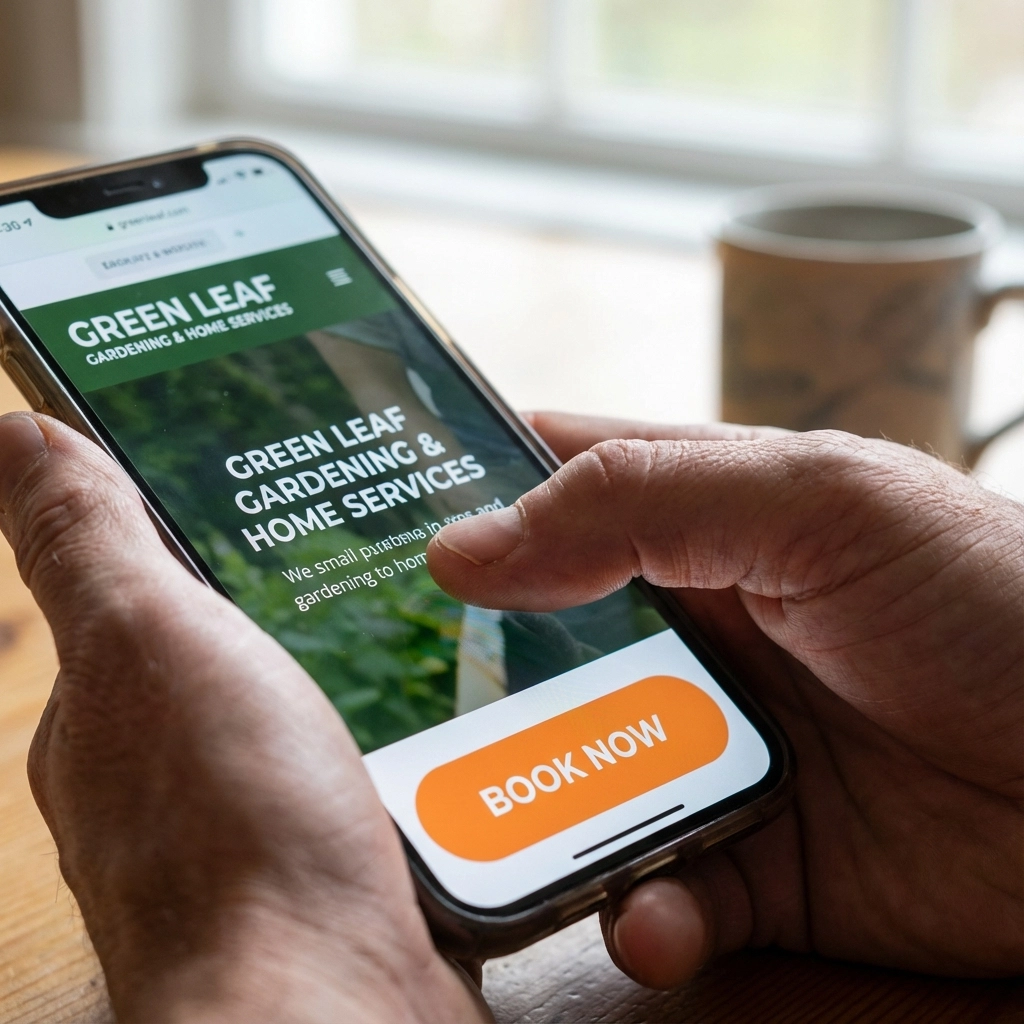
Sticky Mobile CTA
Mobile visitors often need a persistent CTA. Sticky buttons work best for service pages and product pages with high purchase intent.
FAQ: Offer Lock and How to Turn SEO Traffic Into Buyers
1) What’s the difference between an offer and a CTA?
An offer is the full decision package (promise, proof, and path). A CTA is the specific action button or prompt inside that path. To learn how to turn SEO traffic into buyers, you need both: a clear offer and a clear CTA.
2) Should I give something away for free to convert more SEO traffic?
A small “free sample” can reduce risk and increase action, especially for first-time visitors. This could be a checklist, a quick estimate range, or a preview of what they get. Used correctly, it helps turn SEO traffic into buyers by earning a low-risk “yes” first.
3) How many CTAs should a page have?
A page should have one primary CTA and optional secondary links that support it. Too many CTAs create confusion and reduce conversions. If your goal is how to turn SEO traffic into buyers, simplify the decision to one main action.
4) What if my service is custom and I can’t explain it simply?
You can still clarify outcomes, process steps, and the variables that affect scope. Add examples of typical projects and who it’s best for. Custom offers can still turn SEO traffic into buyers when the next step and expectations are clearly defined.
5) What proof matters most for conversions?
The best proof is specific, recent, and relevant to the buyer’s situation. Reviews, before/after results, case studies, and clear guarantees reduce doubt. Proof is one of the fastest ways to turn SEO traffic into buyers without changing your rankings.
Key Takeaways
- Offer ≠ price. Offer = clarity + confidence + next step
- Every page needs one primary action that matches intent
- Value earns the first “yes” and reduces risk
- Proof removes fear and speeds up decisions
- CTA placement matters as much as CTA wording
Get the Offer Lock Checklist
If you want support tightening your offer and CTA flow, it can help to get a second set of eyes on your page structure, messaging, and conversion path. At Elite Web Professionals, we can help you map intent to the right pages, strengthen trust elements, and build CTAs that reliably turn visits into leads or sales.
If you’re working to improve conversions from existing traffic, a focused audit often reveals quick, high-impact fixes. Check out our free resources and links to get started, or learn more about why your business needs a strong online presence with my book “33 Reasons Why You Need A Website Right Now.”

 customersupport@advertisingbusiness.org
 (770) 874-6085