 (770) 874-6085


 770-874-6085
How to Get Personal Training Clients: A Practical Client Acquisition System
Last updated: September 25, 2026
Personal trainers can attract clients by making the offer easy to understand, showing up where the right audience looks, building trust with accurate credentials and useful guidance, and following up promptly. A sustainable client acquisition system also respects schedule capacity: marketing should bring inquiries the trainer can serve well.
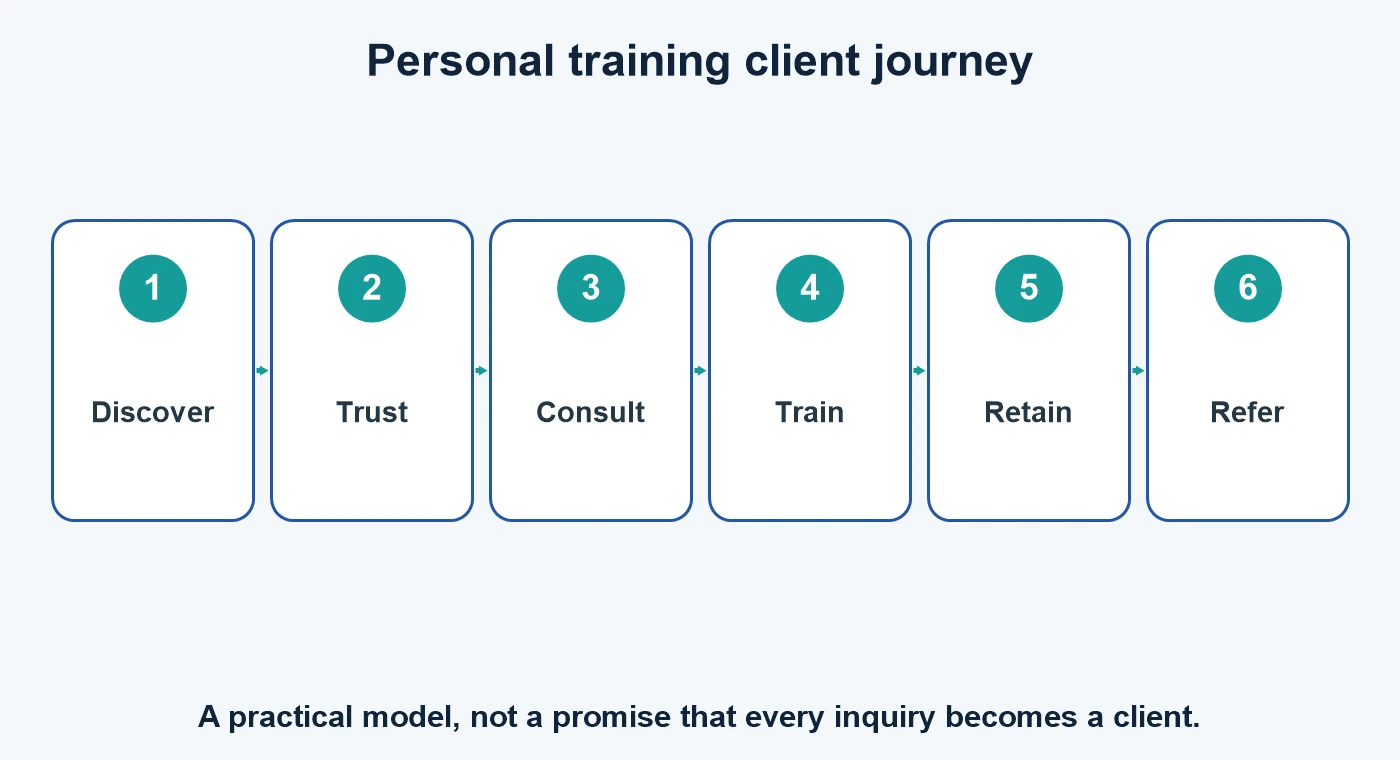
Define who you help and what the next step is
Describe the audience, training format, location or delivery method, and a realistic first step such as asking a question or booking an introductory consultation. Explain what a session includes and how scheduling works. Keep prices, qualifications, and outcomes accurate. Avoid guarantees about weight loss, strength, or health results; individual outcomes vary.
Choose local, online, or a clear combination
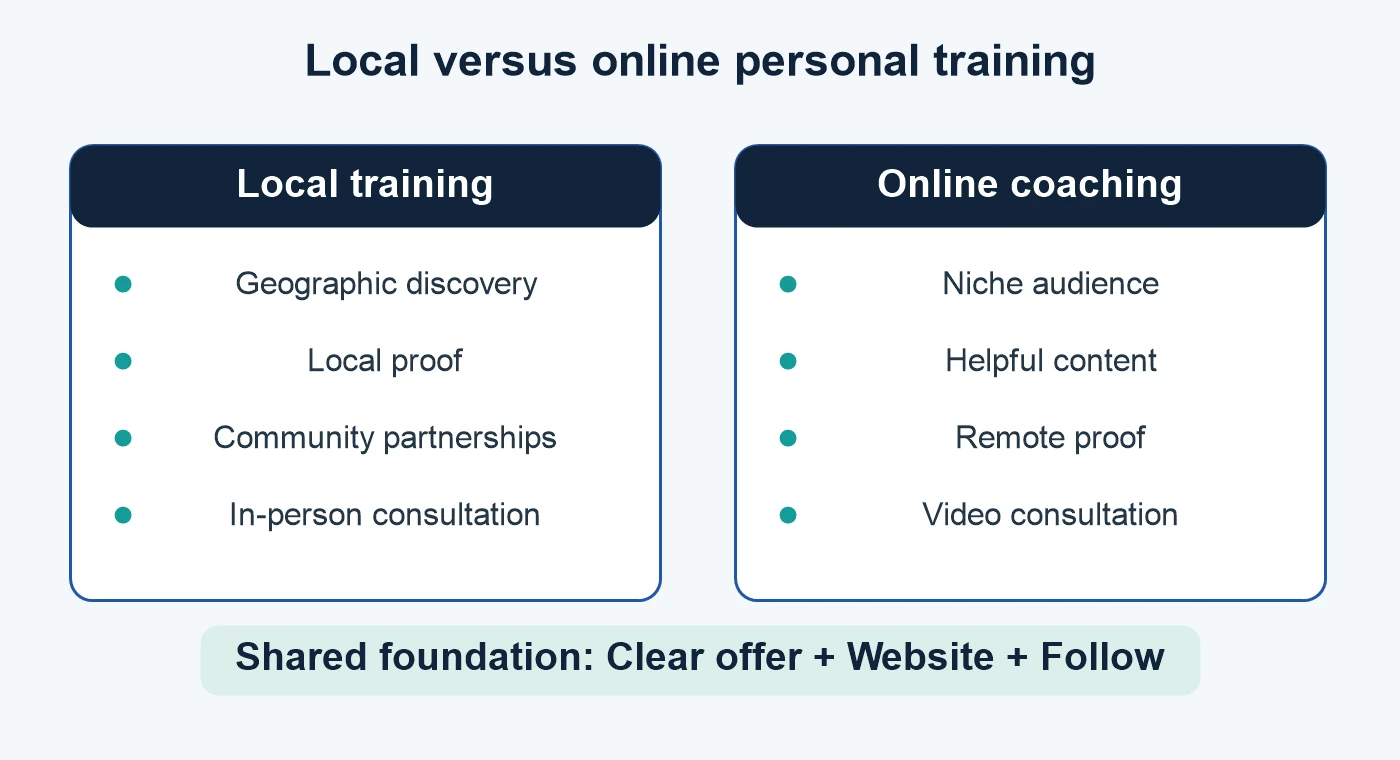
Local in-person coaching depends on a genuine service location or eligible service-area model, proximity, and a clear schedule. Online coaching can reach a broader audience when the trainer has a defined niche, a reliable delivery process, and clear communication. Avoid presenting an online-only business as eligible for a Google Business Profile. If coaching in person at a real customer-facing location, follow Google’s current eligibility rules.
Make your website answer client questions
Include the coaching approach, who it suits, available formats, current credentials, practical expectations, and a clear inquiry path. Use separate pages when audiences or services differ meaningfully. Add useful articles that answer real training questions and link naturally to the related service page. Keep the mobile layout simple and make consultation contact easy to complete.
Build trust with useful proof
Share accurate qualifications and client stories only with permission. Do not imply typical results from an unusual case or make health claims outside your expertise. Ask clients for honest reviews without offering incentives or filtering who receives the request. Google prohibits incentives for reviews; testimonials and reviews should reflect genuine experiences.
Use referrals, partnerships, and useful content
Let current clients know how to refer someone who may be a good fit, without pressure. Consider appropriate local partnerships with complementary businesses when both sides agree and referral terms are clear. Short educational posts, videos, and guides can show how you coach and help prospective clients decide whether to reach out.
Follow up and protect your capacity
Respond to inquiries while the person still expects a reply. Ask about goals, schedule, preferred format, and fit, then explain a clear next step. Use consent-based reminders and keep private health information secure. Before promoting availability, calculate a realistic client load. For example: 24 available weekly sessions ÷ 2 sessions per client = capacity for 12 recurring clients before scheduling/operating allowances. Leave room for travel, administration, cancellations, and recovery.
Consider paid promotion after the basics work
Ads can create inquiries, but only test them after the offer, landing page, schedule, and follow-up process are ready. Set a budget tied to what the business can afford, target only locations or audiences it can serve, and track qualified consultations and retained clients rather than clicks alone.
Frequently asked questions
How do new personal trainers find their first clients?
Clarify the offer, tell existing professional and community contacts what kind of client is a fit, build an accurate online presence, and follow up consistently. Use only truthful qualifications and client permission for testimonials.
Should I train locally or online?
Choose the format you can deliver safely and reliably. Local coaching relies on a real service location and schedule; online coaching benefits from a clear niche and structured remote delivery.
Can online-only trainers create a Google Business Profile?
Google Business Profiles are intended for eligible businesses that make in-person contact with customers. An online-only business is not eligible.
Can I offer a free session for a review?
Do not offer an incentive in exchange for a Google review. Ask for honest feedback without conditioning a benefit on it.
What should I post on social media?
Share practical, accurate training education and your approach. Avoid guaranteed physical outcomes and get consent before sharing client images or stories.
When should I run ads?
After you know the offer, available capacity, landing page, response process, and a way to measure qualified consultations and ongoing clients.
See website design, website content, or contact Elite Web Professionals.

 customersupport@advertisingbusiness.org
 (770) 874-6085