 (770) 874-6085


 770-874-6085
Claude Fable 5.1 for SEO can help teams reason across large websites and long implementation plans, but upgrading Claude Code without migration tests can break otherwise reliable workflows. A stronger model is not a safe one-line substitution when a project depends on tool calls, preserved context, deployment controls, and public-facing checks.
Quick Answer: Should SEO and Website Teams Upgrade?
Test first, then decide. Anthropic documents a one-million-token context window, 128,000 maximum output tokens, adaptive thinking, and specific migration changes for Fable 5.1. Those capabilities can help with large repositories and audits, but they do not validate a redirect, repair a form, or protect a production website by themselves.
Why Fable 5.1 Matters to Technical SEO
Technical SEO work crosses crawl data, templates, canonical logic, structured data, internal links, analytics, and production risk. Fable can help organize that evidence and surface dependencies. It cannot establish that an unverified URL is indexable or that a proposed remediation works in a rendered public page.
Why Fable 5.1 Matters to Website Design and Development
Website work also spans a design system, components, forms, mobile layouts, tracking, and accessibility. Long-horizon reasoning may help identify cross-file consequences, yet every proposed change still needs source control, a protected branch, test evidence, visual review, and a human decision about release scope.
How the One-Million-Token Context Changes Large-Site Work
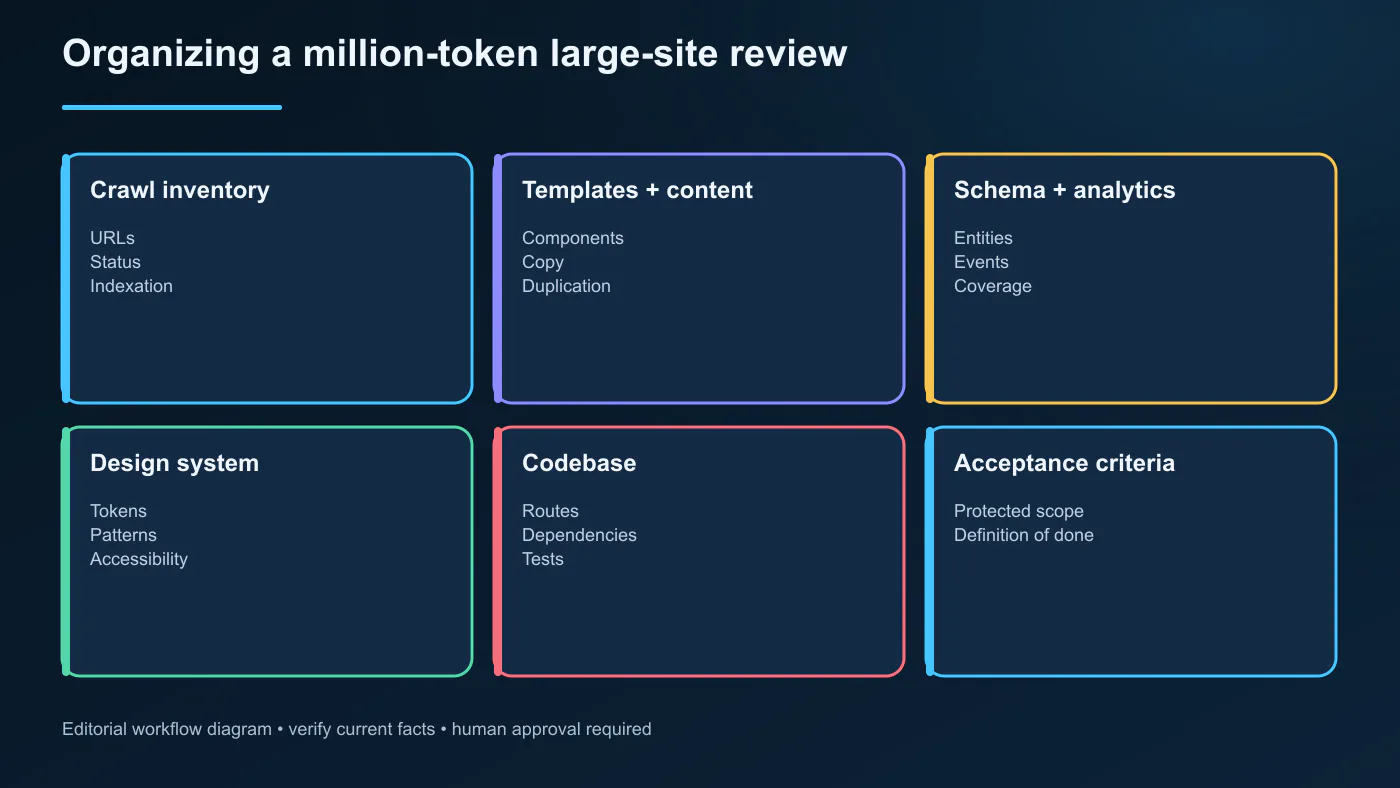
One million tokens can accommodate a larger organized project context, not unlimited reliable attention. Send a crawl inventory, template map, source register, design-system notes, code inventory, and acceptance criteria in a structured order. Do not dump an unorganized crawl or codebase into a session and mistake capacity for prioritization.
Breaking Change 1: Forced Tool Selection Can Fail
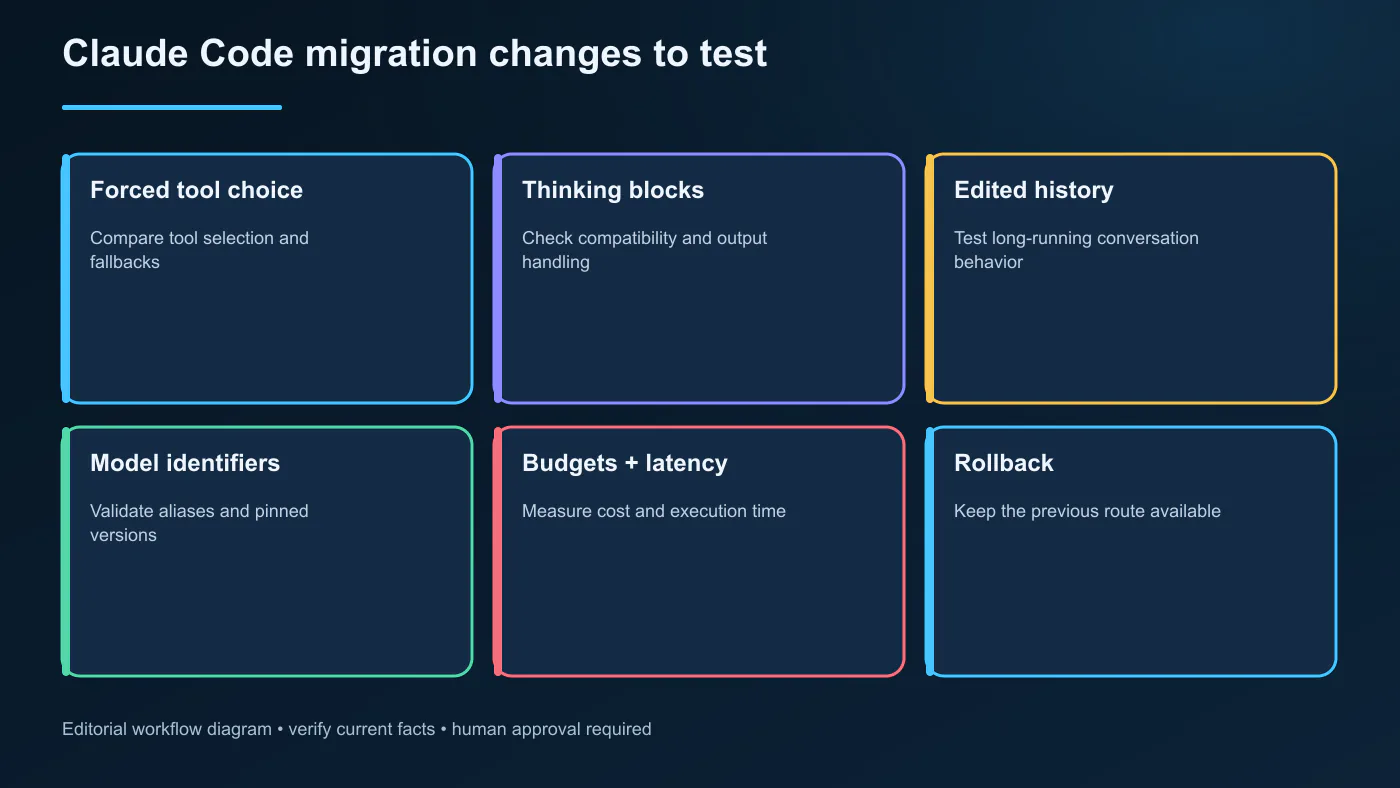
Anthropic’s current release notes state that tool_choice types any and tool return an error for Fable 5.1. Test every forced-tool pattern and use the current migration guidance rather than assuming a prior agent or hook behaves the same.
Breaking Change 2: Earlier Models May Not Read Fable Thinking Blocks
Earlier models cannot read Fable 5.1 thinking blocks, according to Anthropic’s release notes. A workflow that replays conversational state across models can therefore lose or drop preserved reasoning. Treat cross-model handoffs as an integration test, not a prompt-writing detail.
Breaking Change 3: Editing Earlier Turns Can Break Preserved Reasoning
Editing earlier turns can invalidate thinking blocks. Test the actual application, SDK, and retry path. Record what context was retained, what was regenerated, and whether the output still meets the acceptance criteria after an edit or resume.
How Effort Settings Affect Cost, Retrieval, and Thoroughness
Fable uses adaptive thinking and effort controls; higher effort can change reasoning, latency, and cost. Start with a declared effort level, test the same task set, and record time, token cost, correction count, and human-review time. Do not use one successful difficult task as evidence for every routine website change.
Why Long Agent Runs Need Progress Updates and Stop Conditions
Long runs should report the current task, files touched, evidence collected, and reason for any block. Stop when sources conflict, protected scope is reached, tests fail, credentials are required, or a claim cannot be verified. A progress update is useful only when it lets an owner intervene before a risky change compounds.
Safeguard Fallbacks and Model-Identity Logging
Anthropic says safeguards can route some flagged Fable requests to less capable models in certain experiences. That is a safety feature, but sensitive technical work should log the requested model, completed model when available, date, effort, tool access, and test result. Treat the fallback rate as an unknown to measure, not a general defect claim.
Staging, Backups, Change Logs, and Rollback
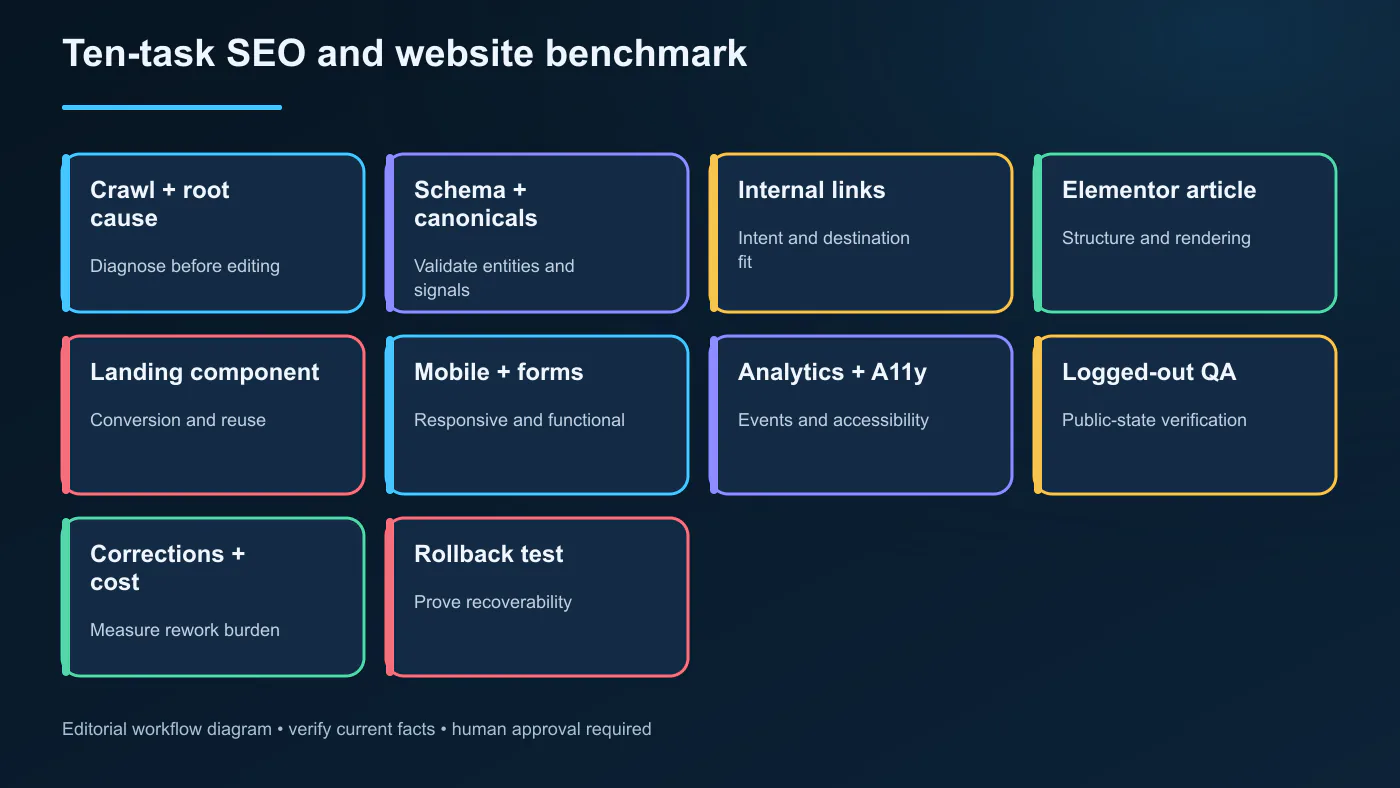
Never grant an AI tool production authority merely because it passed a reasoning test. Keep changes in a protected branch, back up the current state, maintain a change log, test a staging copy, and predefine rollback. For WordPress, preserve the Elementor wp-post architecture and keep a featured image out of the body content.
The Ten-Task SEO and Website Benchmark
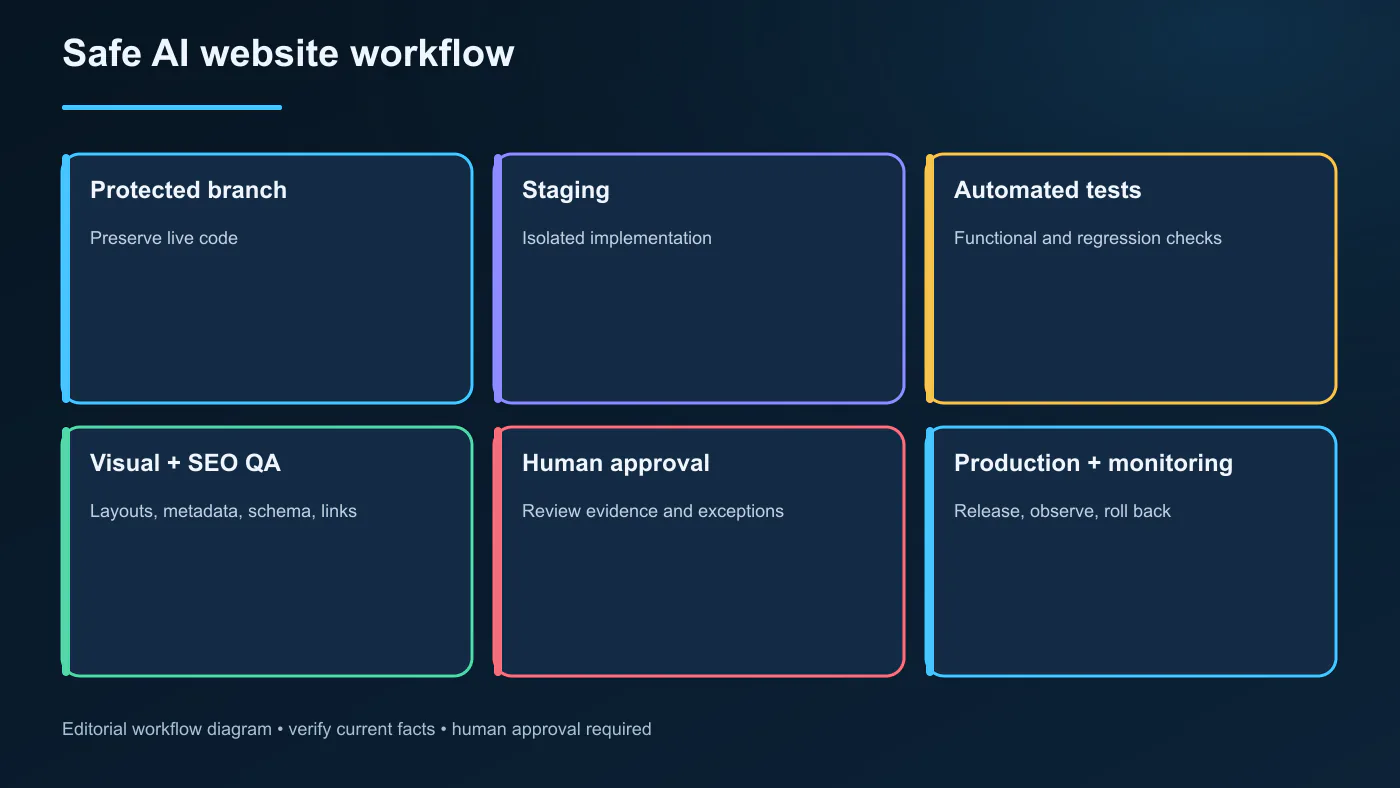
Run the same repository and sources through Opus 5 and Fable 5.1: crawl diagnosis, schema repair, redirect/canonical review, internal links, an Elementor article, a landing component, mobile diagnosis, forms and analytics, accessibility, and logged-out public QA. Score correctness, regressions, coverage, completion time, corrections, human review, cost, and public result. Vendor benchmarks are vendor presentations; do not merge incompatible scores into a winner.
Pre-Upgrade Checklist
Define the task suite; pin sources and environment; test tool choice, thinking-block replay, and edited history; set effort; log model identity; compare outputs; require branch, backup, staging, schema, form, analytics, accessibility, mobile, and logged-out QA; then obtain human approval. Facts are the documented capabilities and migration cases. The cost advantage, long-context salience, plugin compatibility, and real remediation gain remain workflow-specific unknowns.
Final editorial paragraph
Claude Fable 5.1 for SEO should be adopted only after it proves that stronger reasoning improves implementation accuracy without weakening staging, rollback, analytics, accessibility, or public QA. The correct result may be a selective route for hard tasks, not a wholesale model swap.
Test the Upgrade in Staging Before You Trust It With Production
Elite Web Professionals builds Growth Engine Websites that connect visibility, trust, conversion, and measurement. Use a bounded migration test before changing production workflows, then compare the result with your current baseline. Related guides: Atlanta Web Design, Claude Code vs Codex, and the existing Fable developer article.
For strategy and implementation handoffs, see the AI strategy-director workflow.
Frequently Asked Questions
Is Claude Fable 5.1 better for SEO than Fable 5?
Not universally. Fable 5.1 has documented long-context, output, and migration changes, but teams need a controlled technical SEO benchmark to show whether it improves their remediation accuracy, review time, and public result.
Should Claude Code projects upgrade to Fable 5.1 immediately?
No, Claude Code projects should not upgrade immediately without testing. Validate tool calls, preserved context, edited-history behavior, effort, safeguards, hooks, staging, and rollback against the project’s current baseline.
What can break when an API workflow moves to Fable 5.1?
Forced-tool patterns, cross-model thinking-block replay, and edited-conversation history can break or behave differently. Test current Anthropic migration guidance in the actual SDK, agent, and retry paths before releasing a workflow change.
Can Claude Fable 5.1 safely edit a live WordPress website?
No model should independently edit a live WordPress website. Use a protected branch or staging copy, backups, access control, code review, form and analytics checks, schema validation, responsive review, and human release approval.
Which Fable 5.1 effort level should website teams test first?
Start with the lowest declared effort that can meet a predefined task baseline, then compare higher effort only on the same work. Record accuracy, latency, cost, corrections, and human review rather than assuming more effort is better.
Does a one-million-token context window improve large website audits?
It can help when the inventory, sources, templates, and acceptance criteria are structured. It does not guarantee equal attention to every file or page, so teams should still segment work and verify findings.
Does Fable 5.1 replace staging and human QA?
No, Fable 5.1 does not replace staging or human QA. Production websites still require backups, rollback, testing, accessibility, analytics, schema, mobile, and logged-out public checks before an accountable human approves release.
Sources
Watchlist
Verified September 3, 2026, America/New_York. Recheck migration notes, model access, effort and safeguard behavior, pricing, Claude Code compatibility, independent comparisons, and first-party task results before revising claims, metadata, FAQs, schema, or dateModified.
KPIs to Track
- Fable SEO and Claude Code upgrade impressions
- Benchmark and checklist engagement
- Clicks to web-design services
- Audit and implementation inquiries
- Assisted conversions from technical AI content

 customersupport@advertisingbusiness.org
 (770) 874-6085