 (770) 874-6085


 770-874-6085
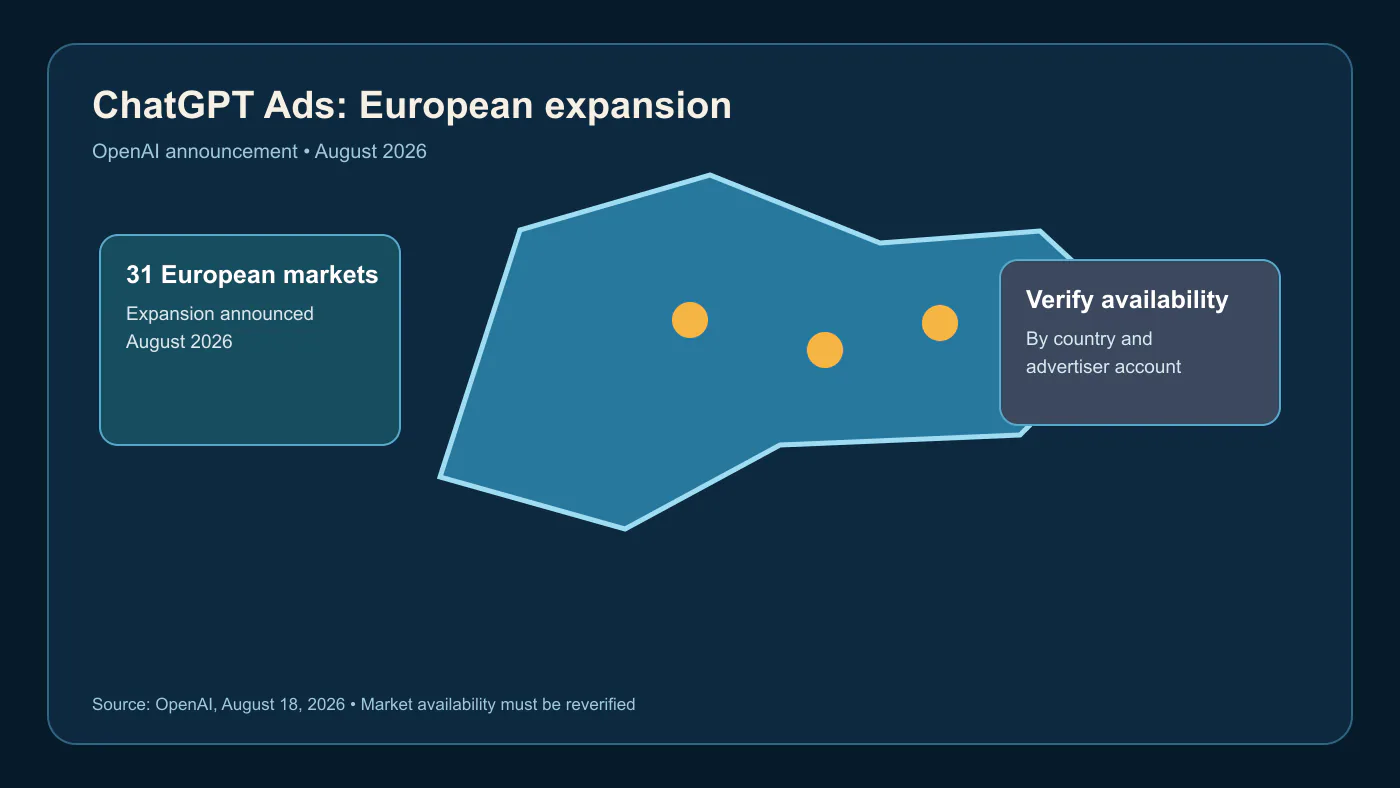
ChatGPT Ads Europe expansion is turning OpenAI’s advertising experiment into a serious intent-driven channel that marketers can no longer treat as a distant idea. On August 18, 2026, OpenAI said it would bring ChatGPT Ads to 31 European markets after a U.S. pilot and eight additional markets. That is a real expansion, but it is not a reason to confuse an emerging conversational channel with a mature search-ad auction.
Direct answer: OpenAI says ChatGPT Ads will expand to 31 European countries and that the platform now supports CPM and CPC buying, conversion optimization, geo-targeting, custom audiences, the OpenAI Pixel, Conversions API, and third-party measurement. Marketers should prepare a measured test, while treating self-serve access, inventory, placement controls, pricing, and attribution details as evolving.
| Key fact | What is confirmed | Business implication |
|---|---|---|
| Announcement | August 18, 2026 | Plan readiness, not a rushed budget move. |
| Scope | 31 European markets | Verify eligibility by country and account. |
| Buying | CPM, CPC and conversion optimization | Choose one primary outcome. |
| Measurement | Pixel, Conversions API and partners | Validate events before launch. |
| Access | Solutions, agency and technology partners initially | Confirm current route; self-serve is evolving. |
What OpenAI Announced About ChatGPT Ads in Europe
OpenAI’s European expansion announcement says the 31-market launch is its largest to date. It names Germany, France, Spain, Italy, Sweden, Norway, Denmark, the Netherlands and Austria among the countries. The company says ads are shown to Free and Go users, while Plus, Pro and Enterprise remain ad-free. It also says conversations stay private from advertisers, ads are labeled and separate from answers, and advertising does not influence answers.
How the Ad Platform Has Changed Since the U.S. Pilot
The platform has advanced beyond the early pilot, but “advanced” does not mean every capability is universally available to every advertiser. OpenAI says it began the U.S. test in February 2026, expanded to eight more markets, and added conversion optimization, geo-targeting, custom audiences and broader measurement. The practical change is that a marketing team can think in terms of qualified outcomes rather than impressions alone—provided its events are reliable.
CPM, CPC, and Conversion Optimization Explained
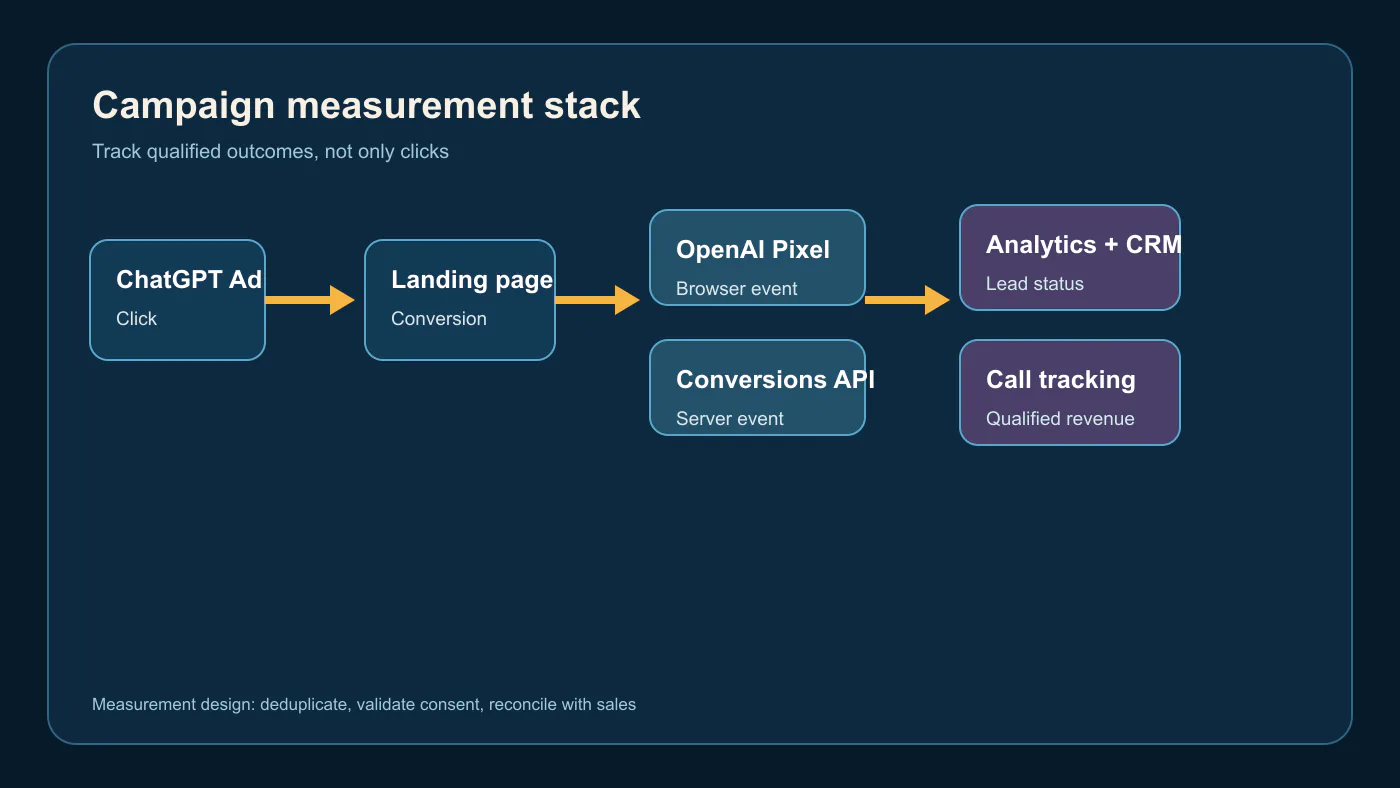
CPM means paying per thousand impressions; CPC means paying when a person clicks. Conversion optimization uses reported conversion signals to help delivery aim toward a chosen business outcome. OpenAI’s May update says CPC was added alongside CPM and that pixel-based measurement and Conversions API support post-click actions such as leads, purchases and sign-ups. A sensible first test selects one conversion, not a menu of loosely defined events.
Geo-Targeting, Custom Audiences, Pixel, and Conversions API
Geo-targeting narrows delivery by geography. Custom audiences let an advertiser define a relevant group within the available product controls. The OpenAI Pixel is browser-side measurement code; the Conversions API is a server-to-server event path. Both are measurement tools, not proof of incremental revenue. Audit consent, event naming, deduplication, CRM status mapping and call-tracking handoff before trusting a dashboard.
Why Conversational Intent Is Different From a Search Keyword
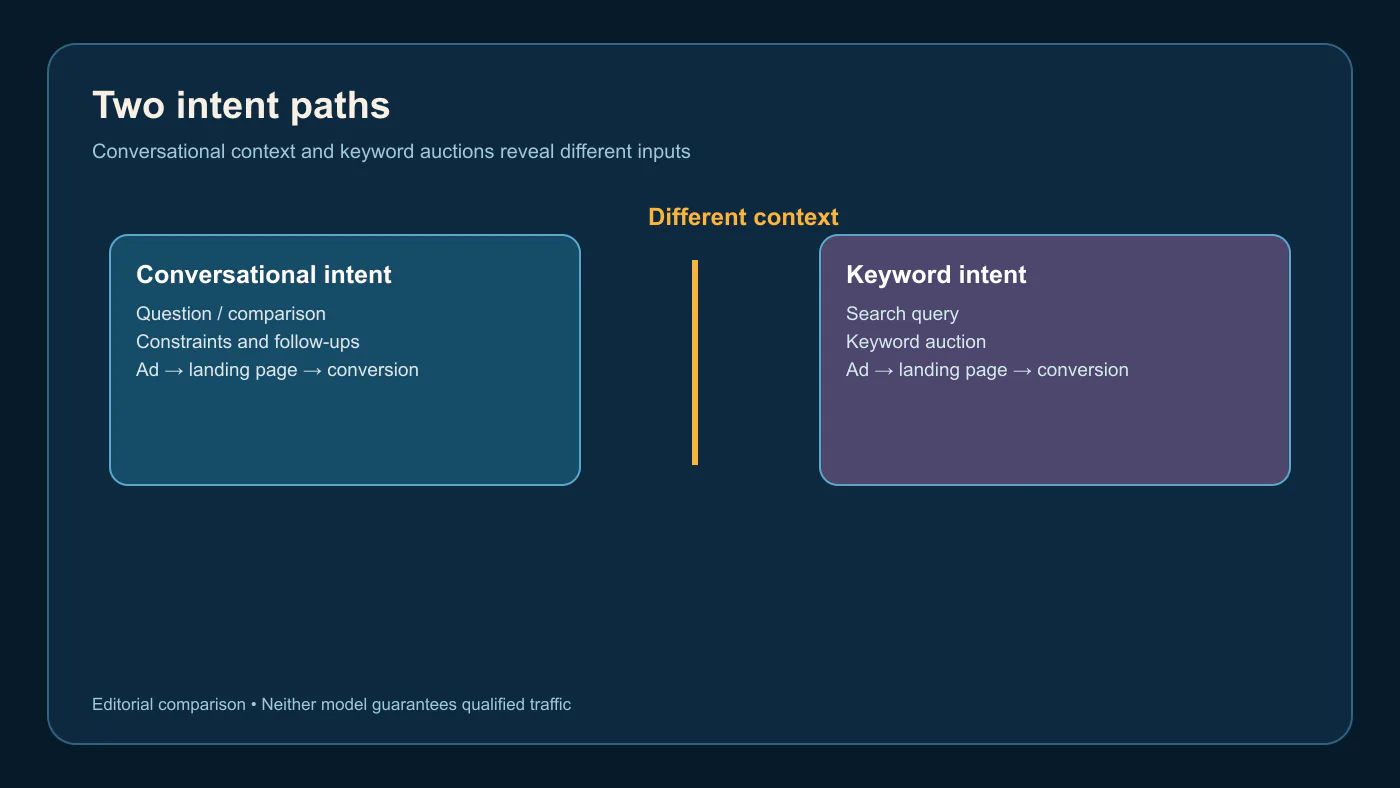
Conversational intent can contain a goal, constraints, comparisons and follow-up questions; a search keyword may reveal only a short query. That distinction can make the surrounding decision context valuable, but it does not make ChatGPT Ads a replacement for Google Search ads. Treat the channel as intent-driven: relevant offers still need to earn the click, and the landing page still needs to answer the buyer’s next question.
Which Advertisers Should Test the Channel First
Businesses with a clear offer, a measurable conversion and a short enough feedback loop are better candidates than advertisers hoping a new placement will repair weak positioning. Lead-generation firms that can qualify calls, ecommerce teams with dependable purchase events, and SaaS teams with a meaningful activation event can learn fastest. Regulated, sensitive or low-margin categories should first confirm eligibility, privacy posture and lead-quality controls.
Fix the Landing Page Before Buying a New Kind of Traffic
A page built for generic traffic often wastes decision-stage traffic. Put the offer, audience fit, proof, pricing context or next step near the top; reduce form friction; ensure mobile speed; and make attribution visible to sales. The existing Growth Engine guide explains why owned content and conversion paths remain valuable when an assistant adds paid discovery.
Build a Controlled Measurement and Budget Test
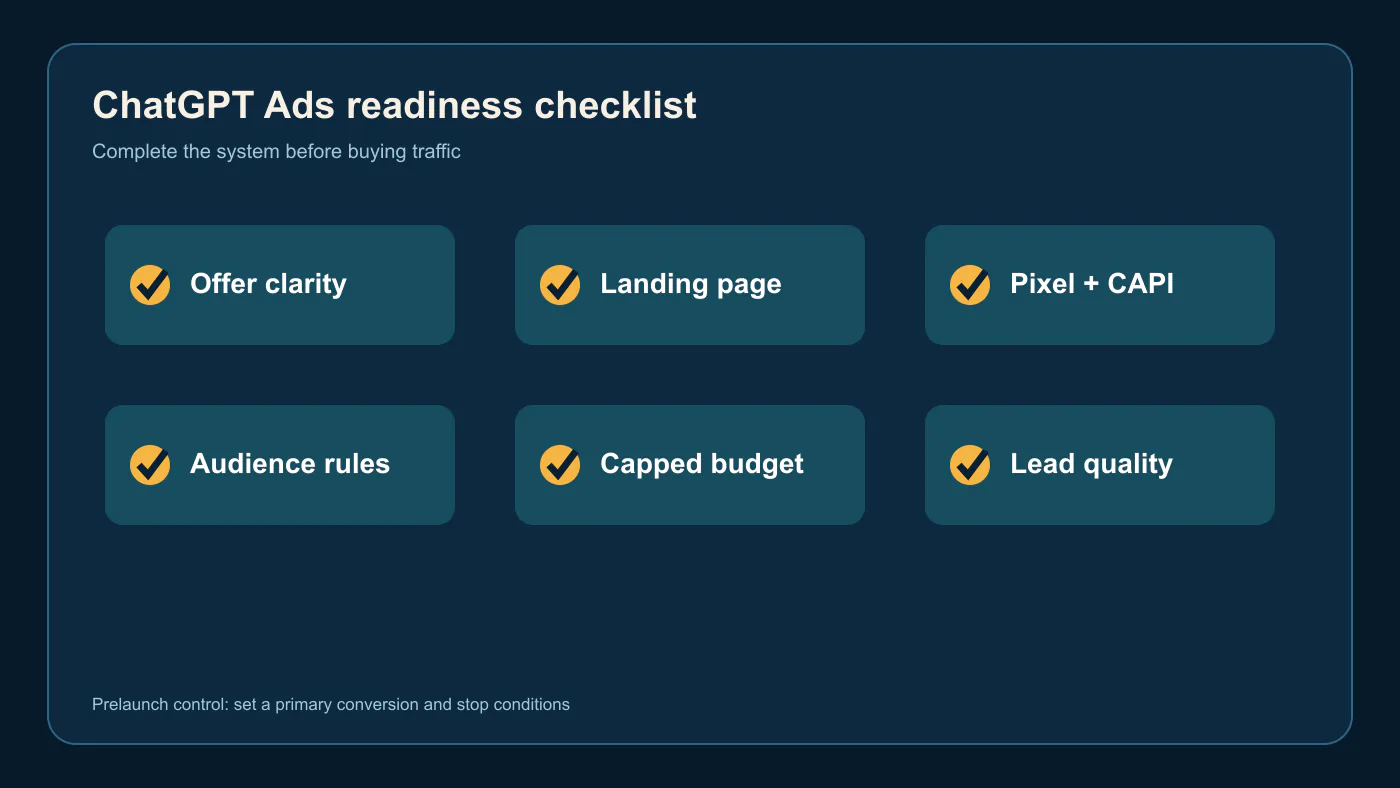
Set one conversion goal, one audience and one offer per test. Separate prospecting, retargeting and customer audiences; validate Pixel and Conversions API events; use distinct landing-page parameters; and compare cost per qualified lead, lead-to-sale rate, assisted conversions and revenue. Set a capped budget, a test duration and stop conditions before launch. Do not optimize only to cheap clicks if the sales team rejects the leads.
Privacy, Brand Safety, Attribution, and Other Open Questions
Confirmed: OpenAI says conversations are private from advertisers and ads do not influence answers. Unknown or evolving: inventory depth, placement detail, exclusions, frequency controls, query or conversation-context reporting, pricing benchmarks and attribution windows. These gaps do not invalidate testing; they define the controls a buyer should document. Ask for the current product terms rather than assuming an early-pilot feature is permanent.
What Marketers Should Prepare Before Wider Expansion
Prepare a clean offer, a dedicated landing page, consent-aware tracking, audience rules, CRM definitions and a lead-quality review. Create a campaign log with dates, audiences, creative, bids, event matching and sales outcomes. ChatGPT Ads Europe expansion should push marketing teams to fix conversion tracking, landing-page quality, audience governance, and test design before moving budget.
Prepare Your Growth Engine Before Buying ChatGPT Traffic
Elite Web Professionals helps businesses build Growth Engine websites around visibility, trust, conversion and measurement: be visible, be found, get chosen. Before a new paid channel gets a budget, a landing-page and paid-search review can connect offer clarity, analytics, call tracking and lead qualification. Explore the team’s pay-per-click advertising services to plan a controlled launch rather than buying traffic without a reliable growth system.
Frequently Asked Questions
In how many European markets are ChatGPT Ads expanding?
OpenAI said ChatGPT Ads would expand to 31 European markets in its August 18, 2026 announcement. The company named several countries but marketers should confirm current availability for their market and buying route, because access and rollout details can change.
What bidding options does the ChatGPT advertising platform support?
OpenAI says the platform supports CPM and CPC buying and has expanded to conversion optimization. CPM buys impressions, CPC buys clicks, and conversion optimization uses conversion signals toward a selected outcome. Specific objectives and account availability should be verified at launch.
What are the OpenAI Pixel and Conversions API?
The OpenAI Pixel is browser-side measurement code, while Conversions API is a server-side way to send conversion events. OpenAI says these tools help measure actions after ad engagement. They still require accurate consent handling, event definitions, deduplication and sales-system validation.
Are ChatGPT ads the same as Google Search ads?
No. Both can support commercial discovery, but Google Search commonly begins with a keyword query while ChatGPT conversations can include goals, constraints and follow-ups. ChatGPT Ads should be evaluated as a distinct intent-driven channel, not assumed to use the same auction, reporting or controls.
Which businesses should test ChatGPT Ads first?
Businesses with a clear offer, a measurable conversion and a way to assess lead quality should test first. Examples include lead-generation, ecommerce and SaaS teams with reliable conversion events. Eligibility, privacy requirements, margin and current access should shape any decision.
What should a marketer fix before launching a campaign?
Fix conversion tracking, landing-page clarity, audience separation, CRM definitions and lead-quality review before launch. Also validate Pixel and Conversions API events, add unique landing-page parameters, set a capped budget and define stop conditions so the test produces evidence rather than noise.
KPIs to Track
- Cost per qualified lead or acquisition
- Conversion rate and lead-to-sale rate
- Revenue, ROAS and assisted conversions
- Pixel and server-side event match quality
- Audience and landing-page performance
- Invalid or low-quality lead rate
Watchlist
- Self-serve access and country eligibility
- New formats, reporting, exclusions and frequency controls
- Pricing and attribution-window detail
- Catalog or feed integrations
Sources
- OpenAI: ChatGPT Ads expands across Europe, August 18, 2026.
- OpenAI: New ways to buy ChatGPT ads, May 5, 2026.

 customersupport@advertisingbusiness.org
 (770) 874-6085